
Natalie
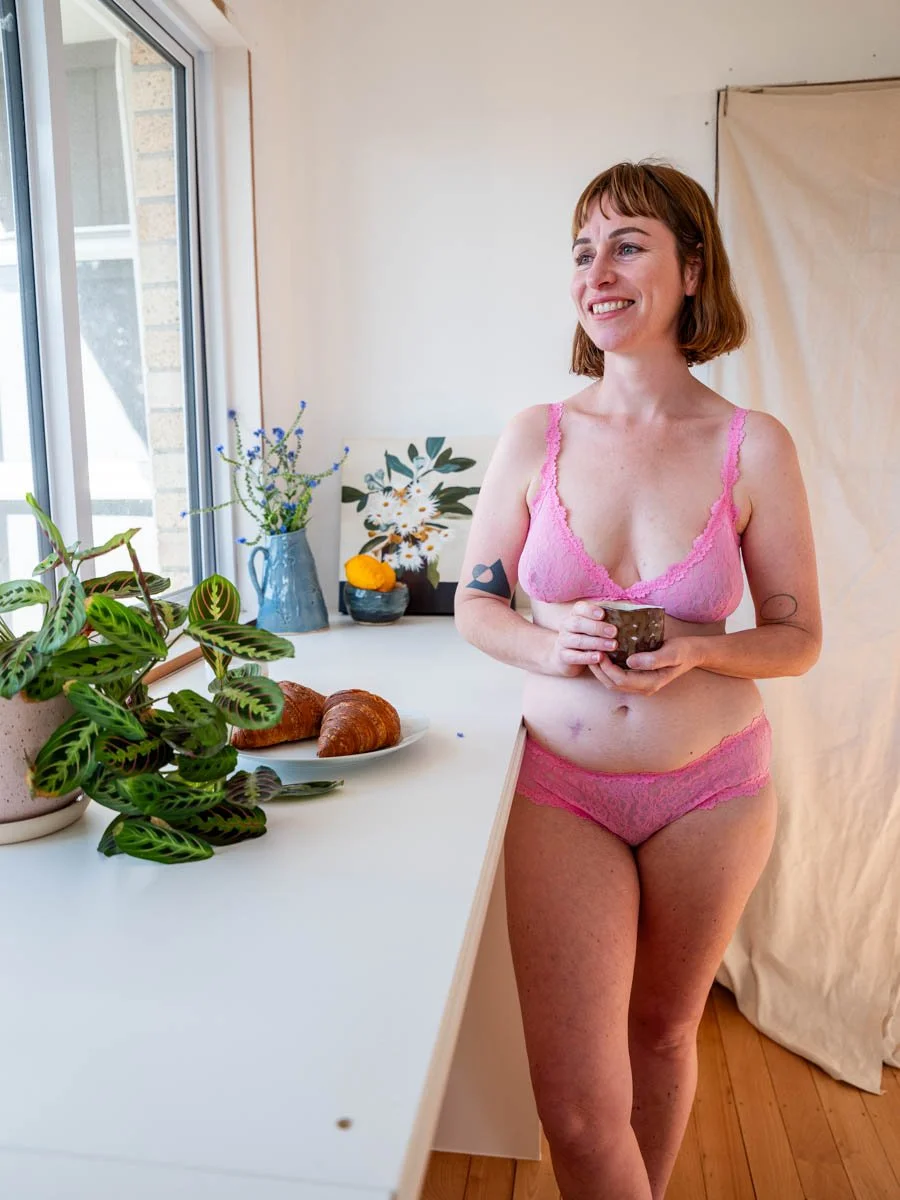
Natalie , 34, Tauranga
Natalie is the author of Endo Empathy, an emotional companion to life with endometriosis; available for pre-order now and being released on 4 November 2026.
Listen to Natalie’s Story
Read Natalie’s Story
I was diagnosed through a sample of endometriosis that they took through my bowel from a sigmoidoscopy. I spent about two years with really bad bowel symptoms and digestive problems and things, and eventually it reached the point that I started passing blood clots in my stools when I was on my period.
And I had a family history of bowel cancer, so I went to the doctor after, you know, multiple appointments throughout the year to go and see them and being denied by the hospital's gynaecology team, gastroenterology team. And I said, "I'm passing blood clots in my stools. I have a family history of bowel cancer. You guys need to figure out what's going on."
And so they finally referred me for a colonoscopy. It was hard for them to actually take a sample of it, of the growth, because of the condition it was in. And of course, that will be because it was endometriosis, and it was responding to my hormonal cycles. So I had just been shedding all of the lining and the blood and stuff like that, so it was really hard for them to get a sample.
At first they thought it was bowel cancer. That was my initial suspected diagnosis. So a few weeks later, I did a sigmoidoscopy, and because of the stage I was at on my cycle, they were able to get a proper sample from that growth. And then from that, they were actually able to confirm it was endometriosis.
And I'd also, in that time, I'd decided to go and see a private gynaecologist because I was like, "This is ridiculous, and I think it might be endo in my bowel." And I explained all of my symptoms, and he said, "That sounds to me like endometriosis in your bowel."
And then after I had my surgery, a couple of months later, of course, they were able to confirm it again from the samples of the tissue that they removed.
I'm at a weird place. I had a bowel resection in February twenty-three [2023]. I had my stoma for four months, had that reversed in June twenty-three [2023]. And then after that, I spent a lot of time trying to figure out how to live with endometriosis in a way that worked for me.
So I went to see a naturopath, I changed my diet, took a whole lot of supplements and stuff, and I was feeling really good. And then not long after that, I went through IVF and fell pregnant with Maisie, and so of course, I didn't have my period for that whole time.
I am living symptom-free, and I'm living symptom-free in hope that since the surgery, nothing's returned, but I also haven't really been menstruating, so I'm sort of in this interesting limbo stage right now with cautious optimism.
But I guess what I am living with is the aftermath of the trauma of my endo experience. I've been going to see a therapist who specializes in EMDR to help me process the trauma of the severity of my bowel symptoms, the fear associated with going to the bathroom.
I've been seeing a pelvic floor physio to help me with pelvic floor tension and pain and more sort of trauma associations there, as well as scar tissue release on my scars from my C-section.
One thing I wish, a myth I wish would disappear about endo, or something I wish people knew about endo, for me it's that it's not, it's not just a painful period, or it's not just a heavy period, because those were the distinguishing questions that I had in my mind when I first had someone suggest endo to me.
My auntie came to stay, and she has endometriosis, and she said to me, she observed how much I was suffering, and she said, "Do you think it might be endometriosis?"
And I was just thinking, "I don't think so. It's nothing to do with my period." You know, at that point I was just having really bad constipation, diarrhoea, bloating, indigestion, sort of just digestive discomfort in general, vomiting and stuff like that, fatigue.
And I mentioned it to the doctor the next time I went to see her, and she said, "Well, what are your periods like?" And I said, "Oh, you know, they're pretty much fine."
But of course, I'd been on the pill, hormonally altering my period basically since I'd been menstruating. You know, if that was not still the initial measure and the first thing that people thought about was endo, I could have gotten diagnosed 18 months sooner, and the growth of my bowel lesions might have not been so severe that I may not have required a full bowel resection.
I might not have had to have a stoma and all this scar tissue in my belly and trauma around going to the toilet and, yeah, all of these other things.
I just would just say you're not alone, and that's exactly why I have written Endo Empathy, because I want people to know that they are not alone, and the struggles that they're going through, the pain that they're in, the emotional impact that this disease has on you, you're not alone in feeling this way.
And there's so many of us out there who, even though our journeys can all look different, the things that we've felt along the way are the same. You know, we have these shared emotions and this shared understanding, and that's exactly why I wrote Endo Empathy.
I just want people to know that it is hard, but their feelings are valid and they are safe to feel whatever they need to feel on their journey and to know that they're not going through it on their own.
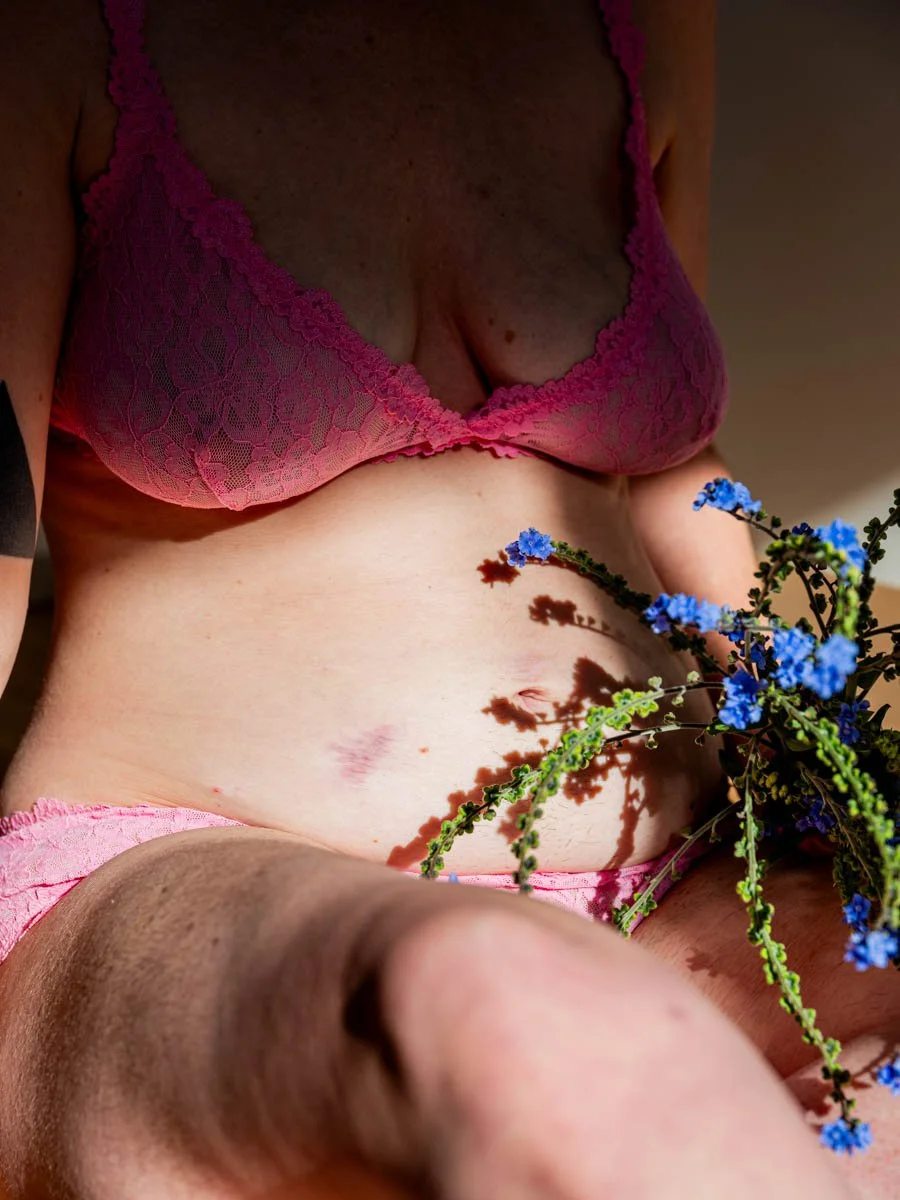
A close up of Natalie’s Stoma Scar