
Yessenia
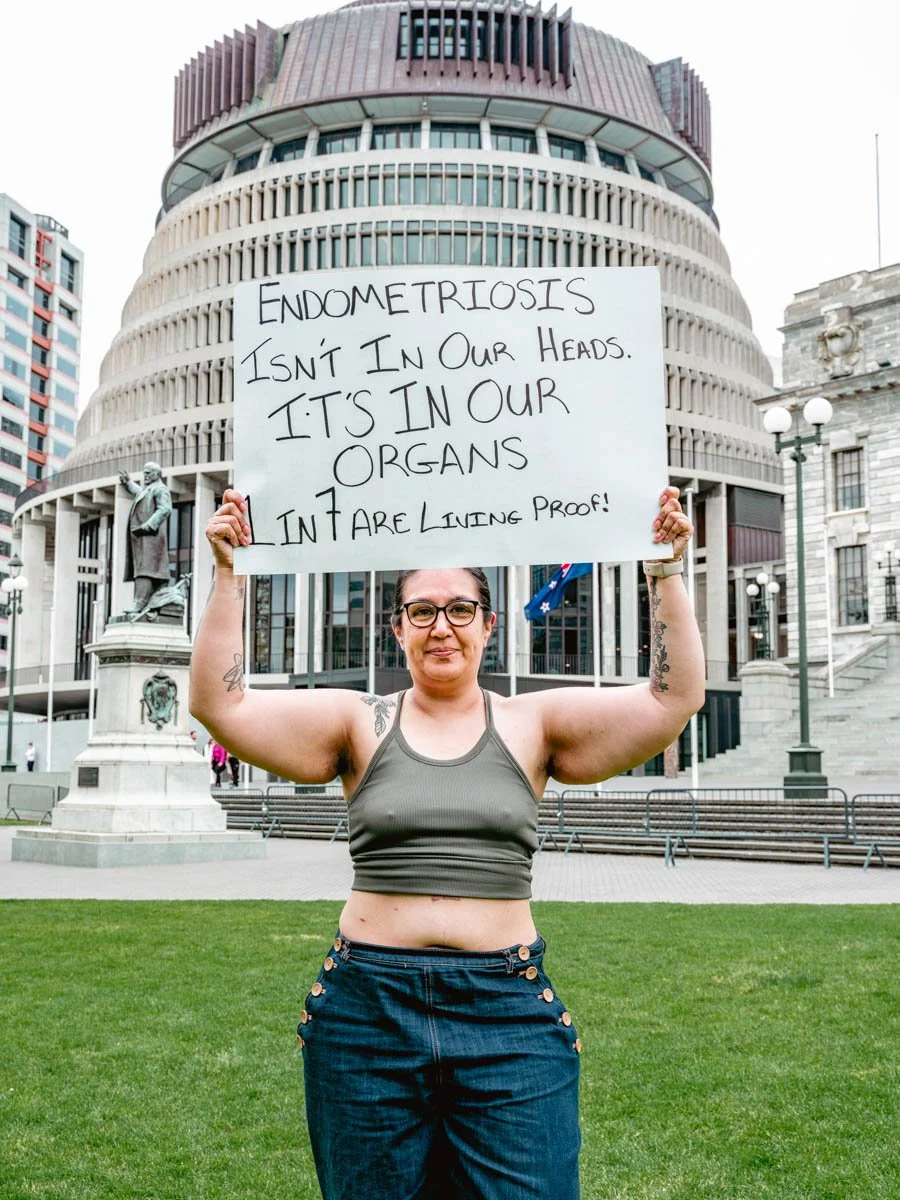
Yesenia, 46, Wellington
Listen to Yessenia’s Story
Read Yessenia’s Story Here
So I was diagnosed quite early on. I was about 20, 21. I remember sort of being in pain from when I was in college, about 15 onwards. Um, and I got my period when I was 15. But I had really heavy periods and pain.
But I was raised by my dad, so, one, when I got my period, I didn't even know what it was. And then two, I just thought that's what everyone went through.
And then when I was 20, just almost 21, I was walking, um, to like the shops to get some pain medication and things like that, and I started having this massive pain. And then when I was in the supermarket, I just felt this like whoosh come over me, like someone had just like dropped this big bucket of water on me. And I just felt all this pressure in my body, and then I was just all sweaty. And I was like, "Oh no, I got my period." And I thought I was just bleeding everywhere.
And then I went to the bathroom and the pain just was horrendous. I rang my stepmom and she took me to the doctor's. The doctor said, in a real flimsy, dismissive way, "You've had a miscarriage." "Did you know you were pregnant?" And I said, "No."
And then I had more complications, and then I talked to my real mom, who took me to the hospital, and then they were like, "This isn't normal. You're so young. This shouldn't be happening."
And they referred me to a gynecologist, and then they were like, "We're gonna do, um, a surgery."
Before the surgery, the gynecologist was like, "So we're gonna take you into surgery. We think you might have this illness called endometriosis." Didn't say what it was. "If we find it, we're gonna remove your uterus 'cause that will fix everything."
And I was like 21 or something by then, and my mom, in a very Spanish accent was like, "If you remove her uterus without talking to her, I will come after you with a blunt spoon and cut off your balls."
And I was like, "Mom, stop, stop." And she's like, "Do not do this. She's, she's too young."
They did the surgery, said they removed lots of endometriosis and that they found polycystic ovaries and stuff as well, but they've removed it, and I don't need to worry about it. And that was it.
And then they were like, "We're gonna put you on the pill. You won't have any more problems."
No pamphlets given to me. I was just basically told, "You're cured because we've taken everything away."
I still had pain and other things going on, and then from there I was on the pill for like ten years.
I was with another partner, and we were gonna get married, and like we wanted kids and things like that. And so I came off the pill, and I had said to him, the doc- 'cause the doctors told me when they first diagnosed me that I'd never have children.
And so like it was always really hard for me to get into a relationship... because I was raised to be a good wife, to cook, to clean... to have kids. And so I struggled to stay in relationships 'cause I was like, "Well, who's gonna want me?" I can't do what I was born to be here for.
So then I came off the pill, and then things just got way worse and I had another surgery. And then I had, like, quite a few more pregnancy losses. And then more complications.
And then at one point, for three years, I had a surgery every year.
And then no one talked to me about, like, all the damage that the surgery could be doing to my body...
Unfortunately, having miscarriages and things like that just became a norm for me.
So I had nine pregnancy losses. My body was just so damaged.
I had ectopic pregnancy because one of my fallopian tubes twisted, and so I had to have that removed. Um, and then I lost that tube, so I only had my ovaries.
So that was another surgery.
And then, like, we tried IVF, and I got pregnant, but the baby didn't stick, so I had lost that baby as well.
Um, and then I just decided that I couldn't do this to my body anymore, no matter how much I wanted to have more kids. And it just got so hard and took a toll, so my marriage ended.
And then I had yet another surgery, which was the hysterectomy. I thought that was gonna cure me. But it didn't. It made my endometriosis worse.
I was, like, in my mid-30s and I started to read up on endometriosis. I didn't find any support systems. People that I reached out to or organizations just were like, "Oh, just keep taking the pill, see a fertility specialist. That's all you can do."
But there's just no support.
And then that's how I started Endo Warriors. I got so sick of being alone, and one day after being home again from hospital, I was just like, "I don't want other people to go through this. I don't want people to feel alone."
I think the biggest misconception is that it's a reproductive illness, when it's not. It's actually a whole body illness that affects nerves, organs, and even your brain.
Unfortunately, you know, like people, they fight for that diagnosis, which we should. We should be getting that diagnosis early, but then you're diagnosed and nothing happens.
So my advice at the moment, under the current system that we have here in Aotearoa, is do your own research. Start small. Just don't overwhelm yourself. Look at what works for you, and don't compare yourself to someone else that has endo.
And all of that sounds so overwhelming as I say it all. So I think grab a diary or a book or an app or something like that and track everything because then you'll start to see patterns.
And then if you start to see a pattern you can go to your doctor and be like: "Right, I'm seeing this."
Ask for longer doctor appointments, you know, and hold your doctor accountable. You really have to be your own biggest advocate and do a lot of work yourself.
But you know, we're here. I, I can help people with like the questions to ask and being held, you know, with their doctors and things like that.
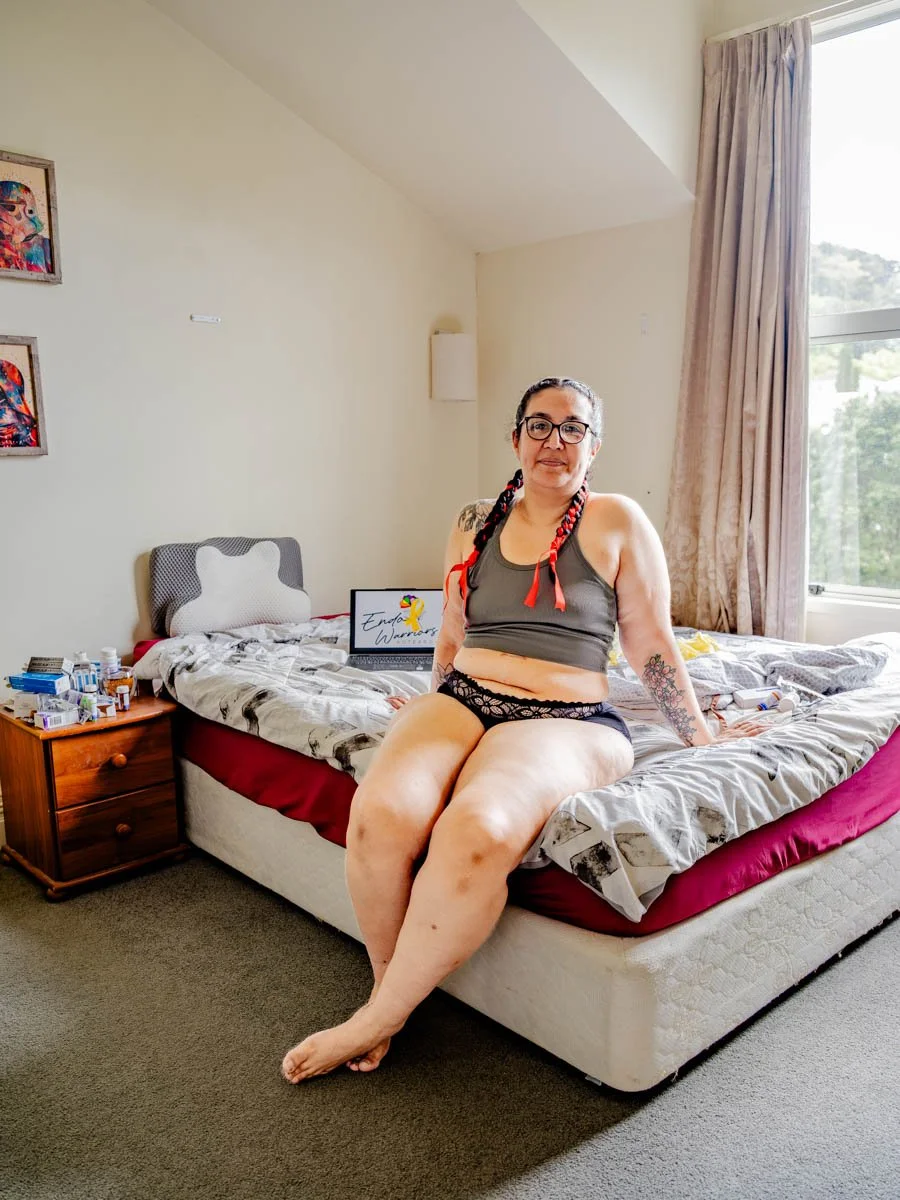
Yesenia is the founder of Endo Warriors Aotearoa
Yessenia (she/they) founded Endo Warriors Aotearoa from lived experience, cultural strength and a determination that no one should feel unheard, dismissed or alone.