
Helen
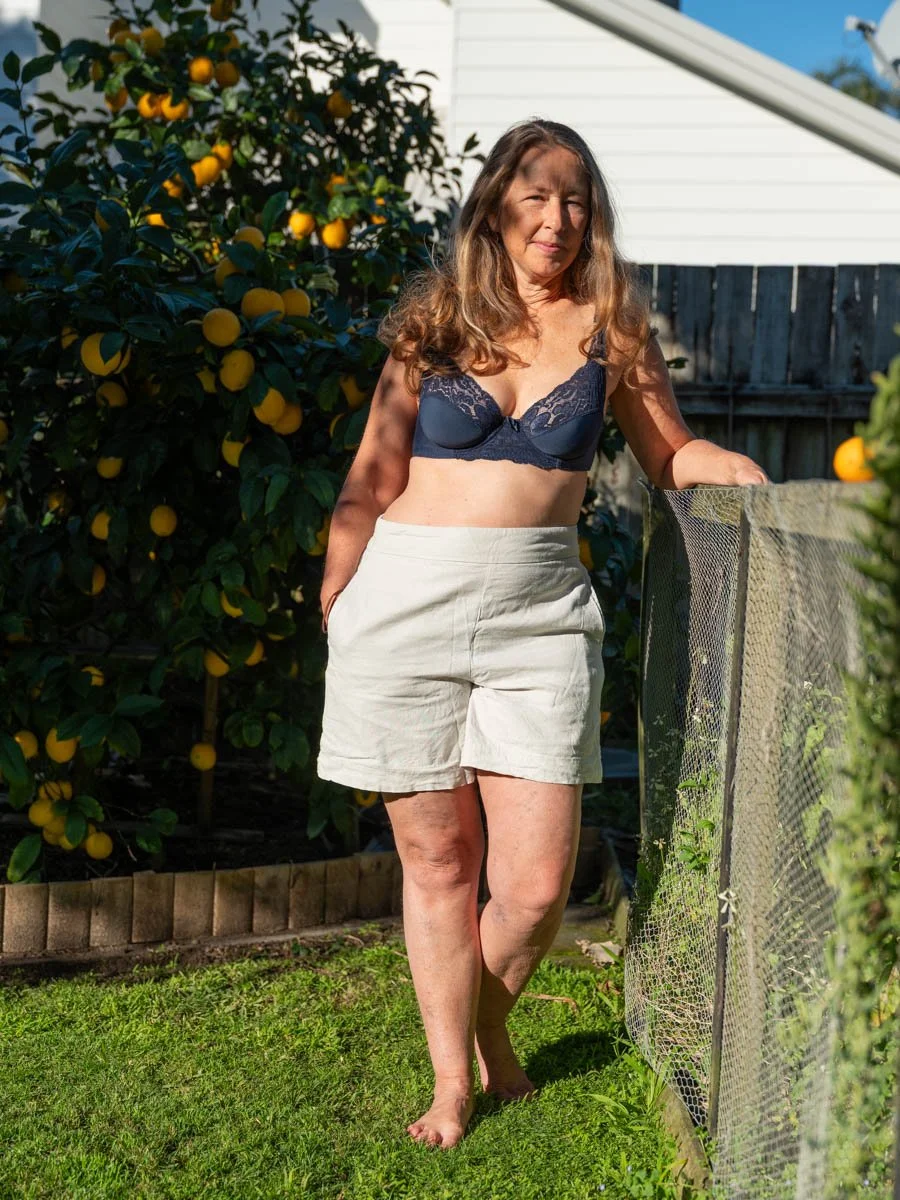
Helen, 57, Ohope
(Helen is the mother of the photographer)
Listen to Helen’s Story
Read Helen’s Story Here
It's hard to know when my symptoms began, as my very first period was extremely painful at around the age of ten. And I remember sitting in the sick bay with an extremely sore stomach, not knowing what was going on, and then suddenly it seemed to get better. And then later on that day, I had my first period.
From then on, my periods were often extremely painful. And I remember at the age of fourteen, walking home—trying to walk home from school—with an extremely sore stomach and almost fainting on the way home and really having to stop a number of times and sort of catch my breath.
I went to the doctor a few times. They didn't really know what to do. I did have some medication, which did seem to work actually, but later was withdrawn from the market because it was... Well, I don't know what damage it was giving others, but it was giving me heart palpitations.
One of the things my GP did recommend all those years ago was cold-pressed sunflower oil, and that did seem to work. It did seem to take the edge off the pain, so that was a very unusual thing to have advised by your GP back then. So I did use that intermittently over the years.
I was never really diagnosed as having endometriosis until at about the age of 50. I had a checkup and I had a vaginal ultrasound, and the diagnosis then was adenomyosis with a high likelihood of endometriosis as well. Especially given all my symptoms over the years of extremely painful periods and also very heavy, very heavy periods over the years.
I think one of the biggest myths around endometriosis is that it, it just affects your periods. It's, it's something that affects your whole body, and it also can have a quite a big impact on your life if you're, if you're having very painful periods, and they're lasting two days of every month or longer. Um, and I know, you know, many people have a lot more pain and over an extended period of time.
And also, flooding. There were many things I didn't do because I was unable to, or I was unable to go out for an hour without having to stop and, you know, change your tampon and your pad and, um, cope with all, all that sort of stuff. So sometimes it was just easier to stay home.
I think the effect for many women on their mental health as well is incredible and is not, well understood at all. And I think because endometriosis can be related so much to general body inflammation as well as being in pain, also related to gut dysfunction. So that, you know, it's a whole systemic issue. It's not just about having painful periods.
I think the advice I would like to give to people who are newly diagnosed or trying to get diagnosed is really look outside the medical model. The medical model can be really useful and it's, it's great to get a proper diagnosis. But I think it's so important to, to look outside and look at some alternative therapies that have some good scientific background behind them.
I'd highly recommend reading someone like Lara Briden's books, who's done a lot on reproductive health. For some people, changes in diet or extra, vitamins or, you know, like even the sunflower oil that I was, um, suggested to have, some of these things can make a huge difference. And I think it is worth trying different things to, see what helps relieve your pain and, helps you get through this time a little bit better.
I am now fifty-seven and post-menopausal, and I have to say it's quite a relief not having a monthly period anymore and not going through that pain every month or having, super hea-heavy periods.
For me personally, um, in my later years, I had a Mirena put in and that was wonderful and I, I, you know, would highly recommend also that, sometimes you need to do things that help you live a life and if getting a Mirena or being on the oral contraceptive pill can help you get through those difficult years, um, I think that that's what is a good, you know, it's a good thing to do.