
Abigail
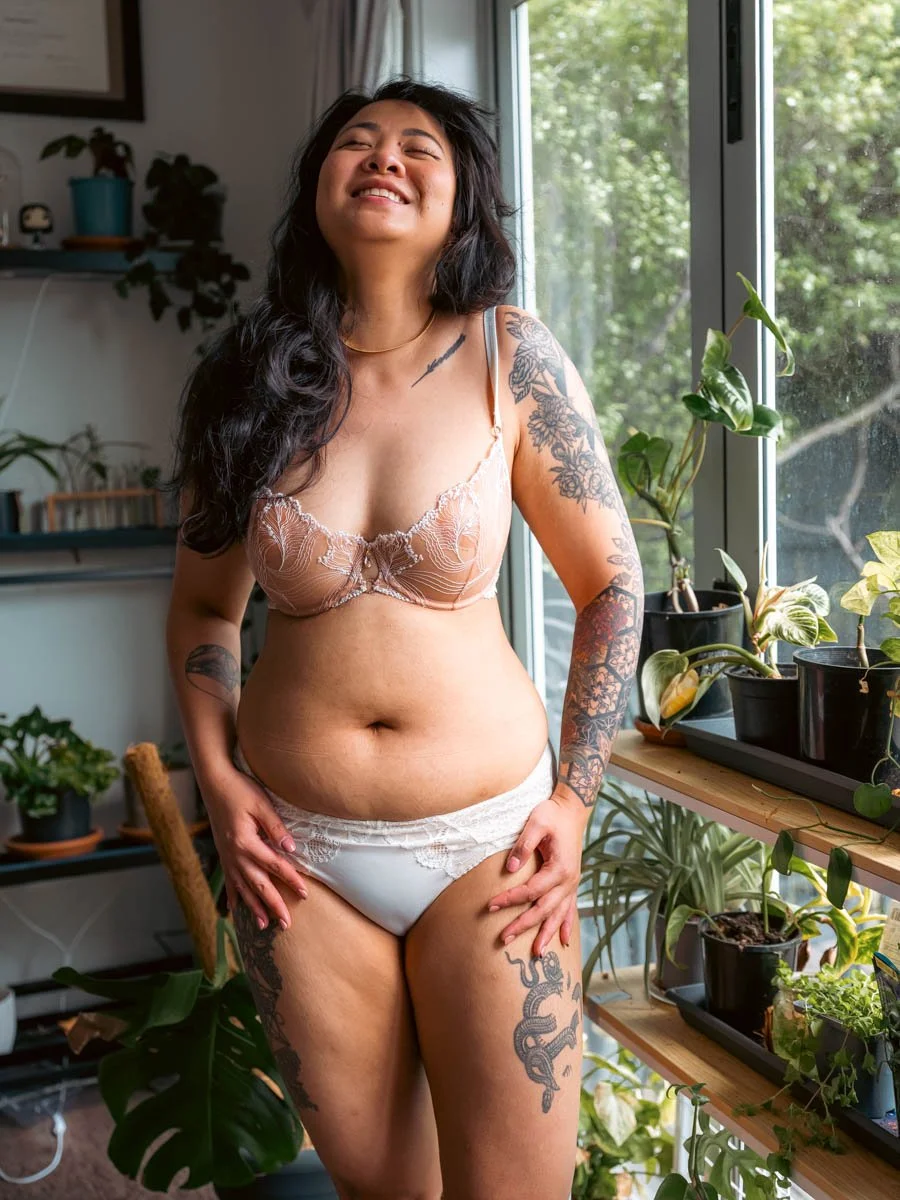
Abby, 34, Christchurch
Listen to Abby’s Story
Read Abby’s Story
So I guess my journey would've started when I was 13 or 14. I was having terrible, like really heavy periods, um, lower back pain, pelvic pain, pain that shot down my legs. Um, so mom took me to the gynae just to check it out. And the female gynae didn't really do much except do an ultrasound scan. Couldn't find anything, um, and the first thing she told my mom, she didn't even talk to me, she talked to my mom, she's like, "It's all in her head. It's all in your daughter's head. She's just trying to get out of school." She actually looked at me at one point and she goes, "You know, childbirth is so much more painful." She's like, "You, if you can't handle this, you won't be able to handle childbirth." I can tell you that right now at that age I just went, that's it, I'm not having kids... If it's gonna be worse than this.
I was in high school, and I would I'd be bleeding through my uniform. I had really bad IBS and stomach issues, and I went to see one of the doctors here and for three months they basically just said it's bad gastro, or that, you know, I'm just having food poisoning. So I went and got a second opinion, he actually went, "Okay, well, I'll refer you to a specialist. We'll take a look." Um, so that kind of stretched into the internal ultrasound. And they pushed the rod into one of my eggs— To see if it moved, and obviously— on the scan you can see it's not really moving with the flow.
So that's when I first got my di— they went, "Okay, right, you've, you've ticked some of these boxes. We're gonna get you to see someone." "We can get you in and get you sorted."
Um, but since 2016, it's just been, like, year after year of laparoscopy. So seven laparoscopies in total. Um, and then finally last year I got my left egg and both of my tubes out— just to kind of help me manage the pain. So yes, the pain is somewhat less. Like from a 12 maybe down to an 8... or a 9. Still quite painful in general and, it—even that last part where I asked to get my egg removed, 'cause that was always sticking to my bowel. It took me months— to, to persuade my doctor, my surgeon, to actually do it. 'Cause he was like, "You know, we can just do another lap." I'm like, "Yeah, but that's just consistent— Yeah... laps for the same problem. I'd rather— Yeah... just take it out."
And when I asked him to do it initially, I was 33. And he said no, I was not— mature enough or old enough to make that decision. And then I went back, and I told him, "Look, I found a female gynecologist who is willing to do what I want to do, just letting you know." And he goes, "Oh, okay. Well, I mean, you're older now. You're a little bit more mature."
It, it felt a little bit like gaslighting. The fact that I had to fight so hard— to even get a yes for any of that. Like, it's my body. And I've made him very aware I don't want to have kids. I've never wanted to have kids since I was 18. That's never changed.
So, you know, it's, it's interesting seeing the complexities behind that where I'm having to argue for my own— for my own— Own body rights... freedom.
Bo— Yeah. Yeah, exactly. It's terrible.
Uh, I would still say it plays a huge part in what I do. I mean, if I wake up and I'm sore and I can't move, I'm in pain, and I have to take, codeine or anything like that, that's it. That's my day. Because I can't work on stuff like that. I, I work in healthcare. I work with other vulnerable people, so for me to be, on codeine and having to work, that's not great, not ideal.
It's hard when you're working and you don't wanna call in sick all the time, but you kinda have to. I guess it also depends on my pain on the day, what's happening, if I'm having a flare-up. 'Cause if I am making plans with my best friends and I'm having a flare-up, there's no way I'm going to be happy— with them, and I guess I feel guilty— with that as well 'cause I don't wanna bring the mood down, so I would back out from a lot of plans.
Always advocate for yourself. I think that's the, the most important lesson I learned there when I first got diagnosed. 'Cause, a lot of people, as I said, keep saying it's a bad period, but, you know, what's considered bad to you is probably just the tip, tip of the iceberg for me.
Like, you know, people think it's, oh, it's just heavy bleeding and pelvic pain. No, for me, it's lower back pain, nausea, bowel pain all the time. Uh, my pelvis and my upper, like pelvic area is sore. My lower back's going 'cause I'm curled up all the time as well. Like, my sciatic nerve down my legs, you know, it's really painful and I can't move.
There's all sorts of things that come through, and now with all the new research as well, it, it puts everything into perspective and going, "Hey, look, it's a whole body inflammation issue. It's not just a gynecological issue anymore."
I would tell people, "Don't downplay other people's pain." It's on such a different level that you wouldn't understand. Like, like really, if you've got a partner, a friend, a family member, get yourself involved. Really understand what they're going through.
Advocate for your kids. Don't, don't tell them the period pain is normal. It is not. But also, if you're an adult, advocate for yourself because, you know, the system's rigged, man. The system's rigged. And if you don't push and if you don't stand up for yourself, it is very easy for doctors— to just kind of minimize it and push you under and just go— "Here's some Panadol. Get a hot water bottle. You'll be fine."
Yeah. It's not. Yeah. It really isn't. And, you know, it takes a lot of courage. And just so you know, there's a whole bunch of us. Us endos, we are there for you. Yeah. We will stand with you. Yeah. So advocate for yourself. Be strong. You have a good support team right behind you.
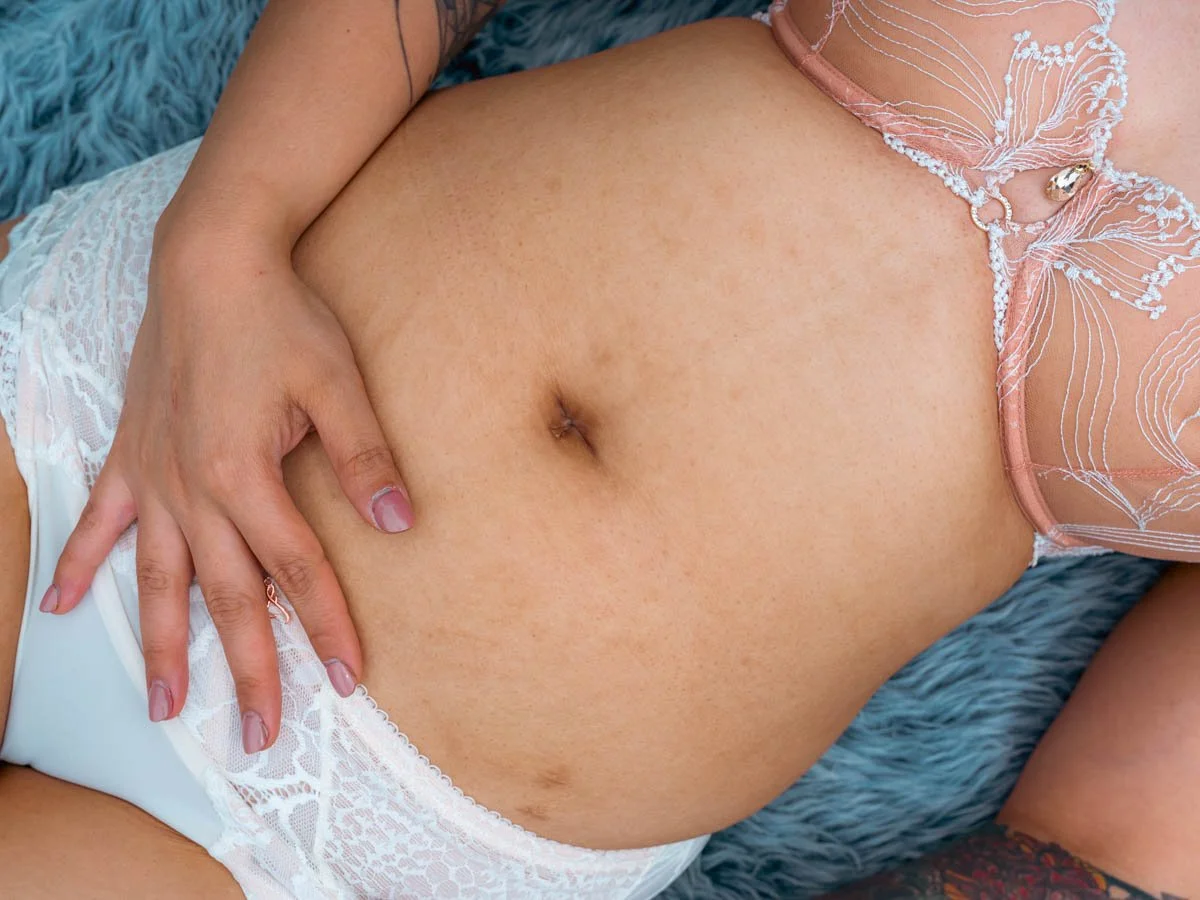
A close up of Abby’s scars.